Page Contents
Your FAA Medical Certificate, Cleared for Takeoff in Orlando
Welcome to the University of Central Florida Aerospace Medicine Clinic
Looking for an FAA medical exam in Orlando? UCF Health Faculty Physician Practice’s FAA-designated Aviation Medical Examiners at University of Central Florida Aerospace Medicine Clinic provide First Class, Second Class and Third Class, certifications, backed by Orlando’s academic medical center. Same-week appointments. Pilot-friendly process.
3
Certificate Classes
~60 MIN
Typical Duration
SAME-DAY
Results
50+
Flight Schools
Your Trusted Provider for an FAA Medical Exam in Orlando
What Is an FAA Aviation Medical Exam?
To operate an aircraft under FAA regulations, most pilots must hold a valid FAA medical certificate, in which is nothing more than proof that they meet the physical and mental health standards required for safe flight.
These examinations are performed exclusively by FAA-designated Aviation Medical Examiners (AMEs), who are licensed physicians that have received specialized training and designation from the FAA Civil Aerospace Medical Institute (CAMI). At UCF Health Faculty Physician Practice, our AME brings that certification expertise to Orlando’s pilot community.
The exam evaluates your vision, hearing, cardiovascular health, neurological function, and overall fitness for flight. Think of it as a focused occupational physical, designed to confirm that you can safely manage the demands of the cockpit.
UCF Health Faculty Physician Practice’s aviation medicine program is unique in Central Florida: we’re the only AME provider backed by a full academic medical system. If your certification requires specialist input (cardiology, ophthalmology, or other) we handle it in-house, saving you weeks of external referrals.
FAR Part 67 Compliance
Special Issuance Support
HIPAA
Compliant
At a Glance
Aviation Medical Certification in the U.S.
Federal Aviation Regulation (FAR) Part 67 governs the medical standards that pilots must meet to exercise their certificate privileges. The FAA established the AME system to ensure that medically qualified physicians perform these evaluations using standardized protocols.
456K+
Active U.S. Pilot Certificates
17K
Pilots Needed by 2032 (Boeing)
+6%
YoY Pilot Certificate Growth
Certificate Classes
Navigating the different FAA medical certificate types is the first step toward your flight goals in Central Florida. Specifically, the class you require depends on whether you are flying for recreation or pursuing a professional career.
Our team provides the comprehensive evaluations required for your FAA medical exam in Orlando, ensuring you meet all FAR Part 67 standards.
FAA Medical Certificate Types
Which certificate you need depends on the type of flying you do. You can select a certificate class below to reveal the detailed FAA requirements and validity periods.
First Class
The First Class medical certificate carries the most stringent standards under FAA regulations. It is required for pilots exercising Airline Transport Pilot (ATP) privileges: The certificate required to serve as pilot-in-command of airline aircraft.
If you are pursuing a career as an airline captain, flying for a major carrier, or operating as a required First Officer on Part 121 operations, you must maintain a current First Class medical.
The exam covers comprehensive cardiovascular evaluation, detailed vision and color vision standards, electrocardiogram (EKG) requirements for pilots over age 35, hearing evaluation, neurological screening, and a complete physical examination.
- Required for Airline Transport Pilots (ATP)
- Required for airline first officers (Part 121)
- Most comprehensive medical standards
- EKG required at initial exam age 35+
- UCF Health’s in-house cardiology streamlines complex cases
Maintaining a First Class certificate is essential for professional careers. Specifically, you must meet the highest FAA safety standards to exercise Airline Transport Pilot (ATP) privileges.
FIRST CLASS — KEY DETAILS
REQUIRED FOR:
ATP / Airline Operations
VALIDITY (UNDER 40):
12 Months
VALIDITY (AGE 40+):
6 Months
VISION STANDARD:
20/20 corrected near & distant
REGULATION:
14 CFR Part 67 Subpart B
Second Class
Second Class Medical Certificate
The Second Class medical certificate is required for pilots exercising Commercial Pilot privileges: Flying for compensation or hire, including charter operations, aerial photography, crop dusting, and commercial sightseeing.
Second Class standards are less demanding than First Class but more rigorous than Third Class. After 12 months, a Second Class certificate automatically degrades to Third Class privileges.
- Required for Commercial Pilot certificate exercise
- Charter, cargo, aerial work, and commercial tours
- Degrades to Third Class after 12 months
- Less restrictive vision standards than First Class
- Good option for career pilots below airline operations
The Second Class medical certificate is the standard for professional pilots not flying for major airlines. Furthermore, it is the primary requirement for those earning a living through various commercial aviation activities.
SECOND CLASS — KEY DETAILS
REQUIRED FOR:
Commercial Pilots, Charter (Part 135), & Crop Dusting
VALIDITY:
12 Months (All Ages)
VISION STANDARD:
20/20 Distant, 20/40 Near/Intermediate
REGULATION:
14 CFR Part 67 Subpart C
Third Class
Third Class Medical Certificate
The Third Class medical certificate is the most common FAA certification and is required for Private Pilot privileges and student solo flight. If you fly for personal recreation, own a GA aircraft, or are just beginning flight training, this is the exam you need.
Third Class is the least stringent of the three classes, and its longer renewal cycle (up to 5 years for younger pilots) makes it the most cost-effective option for recreational flyers.
- Required for Private Pilot and student solo flights
- Most common exam type in the U.S.
- Longest validity period of the three classes
- Most approachable standards for general aviation
- Many student pilots in Central FL get their first exam here
The Third Class medical certificate is the most common FAA certification and is required for Private Pilot privileges and student solo flight. Specifically, its longer renewal cycle makes it the most cost-effective option for recreational flyers.
THIRD CLASS — KEY DETAILS
REQUIRED FOR:
Private Pilot / Student Pilot Solo
VALIDITY (UNDER 40):
60 Months (5 Years)
VALIDITY (AGE 40+):
24 Months (2 Years)
VISION STANDARD:
20/40 Distant & Near (Corrected)
REGULATION:
14 CFR Part 67 Subpart D

Before You Arrive — Checklist
Bring a valid photo ID required for check-in
Complete MedXPress at medxpress.faa.gov — bring your confirmation number
Bring glasses or contacts if you use vision correction
List all medications with dosages (including supplements)
Bring relevant medical records for any chronic conditions or prior issues
Avoid alcohol for at least 8 hours before your exam
Stay hydrated and get a full night’s rest before your appointment

Step by Step
What to Expect During Your Aviation Medical Exam
Your UCF Health Faculty Physician Practice AME appointment is efficient, straightforward, and designed to get you certified and back in the cockpit as quickly as possible. Here’s exactly what happens:
01
Check-In & MedXPress Verification
You’ll present your MedXPress confirmation number (complete this at medxpress.faa.gov before arriving). Our team verifies your application and reviews your medical history documentation.
⏱ 5–10 minutes
02
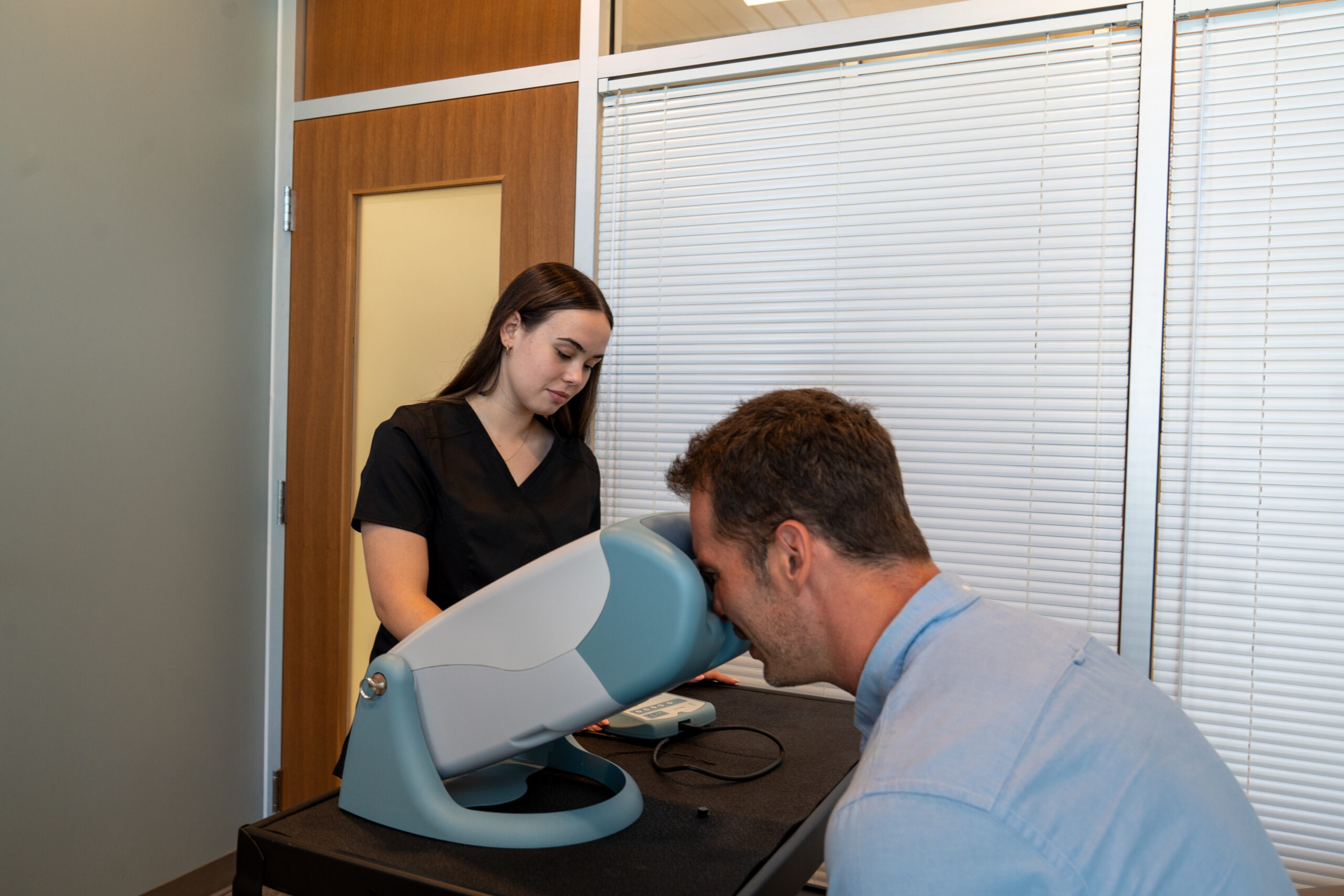
Vision Testing
Distance and near visual acuity, color vision test (Pseudoisochromatic plates), and depth perception screening. Bring your glasses or contacts if you use them. Corrected vision is acceptable for all classes.
⏱ 8–12 minutes
03
Hearing Evaluation
Audiometric testing or a conversational voice test at six feet. Most pilots pass easily. If there are concerns, our AME will discuss options including hearing aids, which are permitted under certain conditions.
⏱ 5–8 minutes
04
Physical Examination
Head-to-toe physical: blood pressure, pulse, height/weight, abdomen, extremities, neurological reflexes, and cardiovascular auscultation. For First Class, an EKG is required at your initial exam and for all pilots 35 and older.
⏱ 15–25 minutes
05
Medical History Review & AME Consultation
Your AME reviews your completed medical history, discusses any conditions or medications, and answers your questions. This is the most important step — our AME is pilot-focused and will explain all options clearly.
⏱ 10–20 minutes
06
Certification & Issuance
In most straightforward cases, your medical certificate is issued same-day through the FAA’s AMCS system. If follow-up is needed, your AME will explain next steps and estimated timelines clearly.
⏱ 5–10 minutes
Our Advantage
Why Pilots Choose UCF Health Faculty Physician Practice for Their FAA Medical Exam
FAA-Designated AME with Full Credentials
Our AME holds active FAA designation and stays current with CAMI training updates. You can verify our designation directly on the FAA’s official AME locator here.
Pilot-Centered, Judgment-Free Process
We understand that your medical certificate is your livelihood or your passion. Our team treats every pilot with respect, discretion, and a commitment to finding the best path to certification — not looking for reasons to ground you.
Same-Week Appointments Available
We offer dedicated aviation medicine days with online booking. No months-long waits. When your certificate is expiring or your training is on hold, we get you in fast. Book directly through our online scheduling system.
Full Academic Medical Center Behind Every Exam
Complex case? Special Issuance needed? UCF Health Faculty Physician Practice’s network of specialists — cardiology, ophthalmology, neurology, psychiatry — is right here. What takes months of external referrals elsewhere can often be coordinated in days at UCF Health Faculty Physician Practice.
The Most Convenient FAA Medical Exam in Orlando
Located in Lake Nona, we are the primary choice for an FAA medical exam in Orlando for pilots flying out Orlando International (MCO), Kissimmee Gateway (ISM), and the major flight school corridors in Central Florida.
Meet the Examiner
Looking for an FAA-designated AME in Orlando who understands the complexities of aerospace medicine?
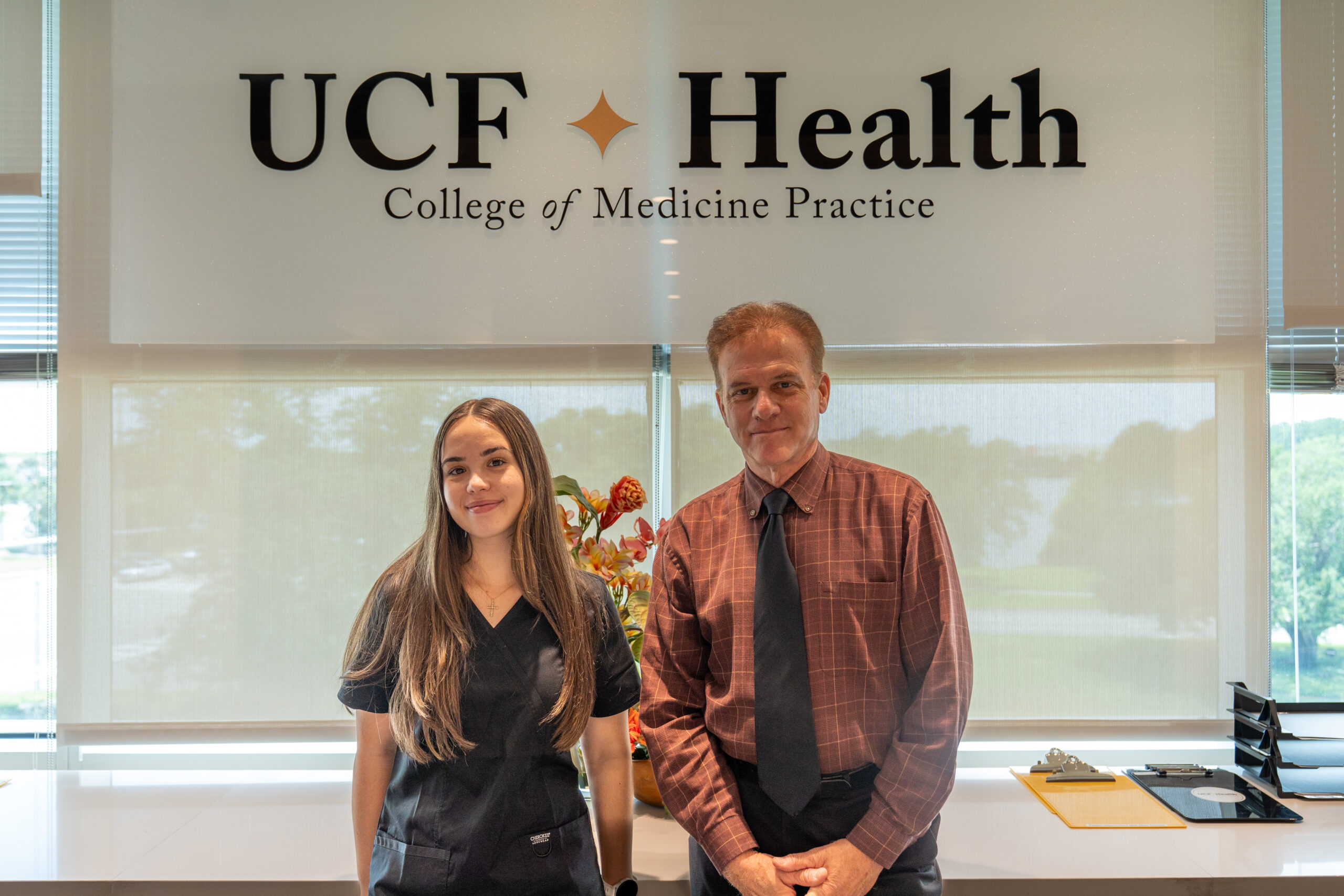
Our program is led by Dr. William ‘Ed’ Powers at the University of Central Florida Aerospace Medicine Clinic, a board-certified specialist dedicated to helping pilots navigate the FAA medical certification process. Whether you are a student pilot seeking your initial Third Class certificate or a professional pilot requiring a First Class medical renewal, Dr. Powers provides expert guidance on FAA MedXPress compliance and Special Issuance (SI) support.
Backed by the clinical resources of UCF Health Faculty Physician Practice, Dr. Powers specializes in managing complex cases—including cardiovascular and neurological screenings—to ensure Central Florida pilots stay fit for flight and cleared for takeoff.

- English
Our Community
Serving Central Florida’s Entire Pilot Community
From student pilots taking their first solo to airline captains maintaining their First Class — we serve three different certificate classes.
Student Pilots
First FAA medical exam guidance. Student-friendly process with clear explanations for new aviators.
Private Pilots
Third Class exams for recreational and personal flying in Central Florida and beyond.
Commercial Pilots
Second Class certification for charter, aerial work, and commercial operations. Fast turnaround.
Airline & ATP Pilots
First Class medical exams every 6–12 months. Trusted by airline crews based at MCO and SFB.
Aviation Students
UCF and area flight academy students.
Flight Instructors
CFI medical renewals with priority scheduling. We know your certificate is your classroom key.
Special Issuance Cases
Complex medical histories handled in-house. In-house specialists means faster clearance timelines.
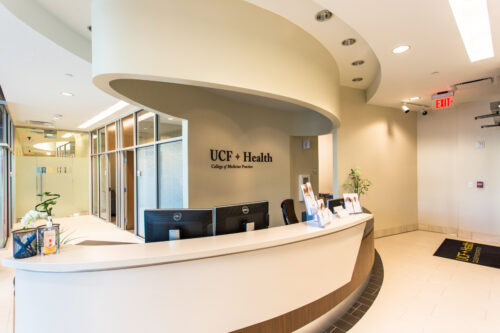
Exam Pricing & Payment Details
- Exam Pricing: A basic fee of $200 applies to all certificate classes (First, Second, and Third Class).
- EKG Fee: An additional $50 fee applies if an EKG is required during the examination (such as for initial First Class exams for pilots age 35 and older).
- Payment & Insurance Note: Payment is accepted via credit card or debit card. Please note that UCF Health cannot bill insurance for FAA medical examinations.
Pilot Questions
Common Questions from Pilots
Honest, direct answers to the questions we hear most from Central Florida’s pilot community.
Most pilots find that their FAA medical exam in Orlando at our facility takes between 45 and 90 minutes, depending on the class of certificate.
Third Class exams for healthy patients with no complex history typically run 45–60 minutes. First Class exams and those involving medication reviews or complex histories may take 60–90 minutes. Completing your MedXPress application before arriving is the best way to stay on the faster end of that range.
Renewal depends on your class and age.
Specifically:
First Class: Every 12 months (under 40) or 6 months (40+).
Second Class: Every 12 months for commercial privileges.
Third Class: Every 60 months (under 40) or 24 months (40+).
Welcome to the start of your aviation journey. For your first FAA medical exam, the most important things are: (1) complete MedXPress beforehand and be fully honest — the FAA takes accuracy very seriously; (2) don’t panic about childhood conditions like mild asthma or corrective lenses — these are often non-issues; (3) if you have a history of ADHD medication, certain mental health treatment, or a significant medical event, discuss it with our AME openly. We can help you understand your path before you invest further in training. Most healthy students pass their Third Class on the first try without issue.
Disqualifying Conditions & Special Issuance
Certain conditions are listed as potentially disqualifying under 14 CFR Part 67, including: uncontrolled hypertension, certain cardiac arrhythmias, active coronary artery disease, insulin-dependent diabetes (for First and Second Class), untreated sleep apnea, active psychosis or bipolar disorder, and substance use disorders.
However, many conditions that appear on this list do not automatically disqualify you. With appropriate treatment, documentation, and sometimes a Special Issuance, many pilots with complex medical histories continue to fly. Our AME’s first goal is to help you find a path to certification, not to ground you.
A Special Issuance (SI) is an FAA authorization that allows a pilot to hold a medical certificate despite a potentially disqualifying condition, provided the condition is well-controlled and the pilot can demonstrate they can safely exercise their certificate. Common examples include controlled hypertension, type 2 diabetes, treated depression, and certain cardiac conditions.
UCF Health Faculty Physician Practice’s AME is experienced with Special Issuance cases and can coordinate with our in-house specialists (cardiology, ophthalmology, psychiatry) to prepare your application, which significantly shortens the process compared to managing external referrals.
Medications and Pilot Privacy
Many medications are fully compatible with FAA certification. Antihypertensives, statins, certain antidepressants (SSRIs under specific conditions), and many other common medications are accepted under FAA policy. Some medications require a Special Issuance or observation period. A small number of medications — certain stimulants, most sleep aids, and sedatives — are not compatible with active flight. Our AME will review your medication list specifically during your appointment and give you a clear, honest assessment.
All medical information gathered during your FAA exam is protected under HIPAA regulations and UCF Health Faculty Physician Practice’s strict patient privacy policies. Information submitted through the FAA’s MedXPress system is shared with the FAA as required by federal aviation regulations — this is a regulatory requirement and is disclosed in the application process. Our team treats all patient information with the highest standards of discretion, and we understand the career-sensitive nature of aviation medical records.
Ready to Get Cleared? Book Your FAA Medical Exam Today
UCF Health Faculty Physician Practice’s aviation medicine program offers dedicated exam days with limited weekly slots. We recommend booking as early as possible, especially if your certificate is expiring soon.
Aviation Exam Day:
Fridays 8:00 AM–12:00 PM Limited weekly slots
UCF Health Faculty Physician Practice Lake Nona
9975 Tavistock Lakes Blvd. Orlando, FL 32827
Airport Proximity
ORL: 8 min, MCO: 15 min
ISM: 20 min, SFB: 28 min